


Posted In: Locked Up Abroad is different.
Reality TV is, at its core, about letting viewers revel in the bad decision-making of others: those who speak without thinking, who backstab, who have sex without condoms, who cheat. Frustratingly, though, reality shows—to which I am unapologetically addicted—tend to reward bad behavior, by giving its villains notoriety, spinoffs, opportunities to endorse weight-loss products, a nice sideline in paid interviews with supermarket tabloids, and other D-list rewards.
Locked Up Abroad is different. The National Geographic show, the sixth season of which premiered last week, gives its stars something they wouldn’t get on other reality shows: their comeuppance.
Having debuted in the U.K. (under the title Banged Up Abroad), Locked Up Abroad showcases one person (sometimes a couple) who ends up in prison overseas. Participants fit into one of two categories. The first group are the (largely) innocent: the married missionary couple who were kidnapped in the Philippines by the Islamist group Abu Sayyaf, for instance, or the seemingly goodhearted duo who wanted to help children in Chechnya, but ended up held hostage. These tales of the altruistic and naive can be difficult to watch.
But then there are those who rather deserve what happens to them. Typically these are drug smugglers, and their episodes follow a familiar arc. A young person—they’re almost always young—is bored or in need of cash (usually both). She is desperate or feels invincible (usually both). Someone approaches her and offers a seemingly great deal: an all-expenses-paid, luxurious overseas trip in exchange for a small favor. Sometimes the would-be employer is upfront and admits he needs a drug mule, but downplays the risk; other times, he hints at harmless-sounding illegalities, like bringing back legal goods to beat the export tax. In a few cases, the cover story is painfully thin: Come with me to check out this cool new nail polish technology only available in Thailand, for example. (That woman was in a vulnerable place: She had just been released on bail after killing her partner’s former husband—in self-defense, she claimed.)
The drug smugglers are caught, of course, usually at the airport, and brought to prison. And while a few episodes have taken place in developed countries—Spain, Japan, South Korea—the majority of our anti-heroes end up incarcerated in places with some of the dirtiest and most dangerous penitentiaries in the world.
Take last week’s episode, “From Hollywood to Hell.” (And pardon my spoilers, but this installment is too good not to describe in detail.) In 2001, actor Erik Aude was living the marginal Hollywood dream. An ür-bro, he had played bit parts in Dude, Where’s My Car?(credited as “Musclehead”) and 7th Heaven (“Boyfriend”) when a gym buddy asked him to go to Turkey to bring back “leather goods.” Aude makes the trip, and though a drug-sniffing dog alerts authorities at the Turkish airport, they find nothing—so Aude feels sure the whole thing is legit. He even recommends that one of his brothers start couriering for his friend. Then, when his brother backs out of a planned trip to Pakistan in 2002, Aude steps in, and shit gets real.
It is difficult to feel sorry for Aude. After his escort dumps him in an Islamabad hotel and warns him not to leave because the area is unsafe for Americans, he doesn’t head to the embassy or the airport. Instead, he goes jogging—and even tries to flirt with girls in headscarves on the street (with disastrous results). And when he is taken to the airport with just one suitcase, he is (he claims) not the least bit suspicious that he might be a drug mule. When a customs official asks him whether his trip was for business or pleasure, he cheeses, “Pleasure is my business.”
Aude’s episode is mind-bogglingly watchable, not least because he—of course!—plays himself in the re-enactment. In his telling, he was a virtual action star: On at least three occasions, he single-handedly fights back dozens of Pakistanis. After he takes out a prison bully, he is hailed a hero. He rejects a reduced sentence because it would require him to plead guilty—and his pride is more valuable than his freedom, he says.
Aside from those truly in the wrong place at the wrong time, the most sympathetic characters of Locked Up Abroad may be the embassy employees called in to assist the suspected smugglers. Inevitably, Locked Up Abroad participants are horrified that the embassies of their homelands—usually English-speaking countries like the U.S., the U.K., or Australia—can’t do more for them. I can just imagine U.S. Embassy workers calling “not it” every time they get word from local authorities about some young American knucklehead who thought he could sneak past security with a bag full of cocaine.
Tonight’s episode is called “The Juggler Smuggler,” and its “hero” is Mark Greening, a “party-loving” drug-runner who knows his latest trip is “doomed” when he doesn’t get his fortune told by “his favorite Gypsy woman.” I can’t wait.


Posted In: Low fare airline bmibaby to close
Low fare carrier bmibaby is set to close later this year, threatening the loss of hundreds of jobs and the ending of its flights. The carrier transferred to International Airlines Group, the owners of British Airways, last month, but consultations have now started with unions about its closure in September. The GMB union said it was "devastating" news, especially for the East Midlands, where hundreds of jobs are now threatened with the axe. With bmi Regional, bmibaby transferred to International Airlines Group ownership on completion of the purchase from Lufthansa. IAG has consistently said that bmibaby and bmi Regional are not part of its long-term plans. A statement said: "Progress has been made with a potential buyer for bmi Regional, but so far this has not been possible for bmibaby, despite attempts over many months by both Lufthansa and IAG. Bmibaby has therefore started consultation to look at future options including, subject to that consultation, a proposal to close in September this year." Peter Simpson, bmi interim managing director, said: "We recognise that these are unsettling times for bmibaby employees, who have worked tirelessly during a long period of uncertainty. Bmibaby has delivered high levels of operational performance and customer service, but has continued to struggle financially, losing more than £100 million in the last four years. In the consultation process, we will need to be realistic about our options. "To help stem losses as quickly as possible and as a preliminary measure, we will be making reductions to bmibaby's flying programme from June. We sincerely apologise to all customers affected and will be providing full refunds and doing all we can with other airlines to mitigate the impact of these changes." Jim McAuslan, general secretary of the pilots' union Balpa, said: "This is bad news for jobs. Bmibaby pilots are disappointed and frustrated that, even though there appears to be potential buyers, we are prevented from speaking with them to explore how we can contribute to developing a successful business plan. "The frustration has now turned to anger following the news that Flybe (which is part owned by BA) has moved onto many of these bmibaby routes without any opportunity for staff to look at options and alternatives. Balpa's priority is to protect jobs; and we will use whatever means we can to do so." The changes mean that all bmibaby flights to and from Belfast will cease from June 11, although this will not affect bmi mainline's services to London Heathrow. Bmibaby services from East Midlands to Amsterdam, Paris, Geneva, Nice, Edinburgh, Glasgow and Newquay, and from Birmingham to Knock and Amsterdam, will end on the same date.
Posted In: ‘Depressed and suicidal’ MP Margaret Moran not fit to stand trial
FORMER MP Margaret Moran is not fit to stand trial accused of fiddling Parliamentary expenses because she is ‘depressed and suicidal’, a court has heard. The 56-year-old – who owns a big estate near Orgiva – is suffering from extreme anxiety and had tried to harm herself because of abandonment by the Labour Party and shame over her ruined career, according to consultant forensic psychiatrist Philip Joseph. Dr Joseph added that she also harboured feelings of guilt, hopelessness, shame, worthlessness and ‘the feeling she is being punished for past mistakes for incidents in her childhood and adolescence.’ Moran faces 15 charges of false accounting and six of using a false instrument, which relate to her allegedly submitting forged invoices, between November 2004 and August 2008. The former Luton South MP had previously failed in a bid to sue the Olive Press after we revealed she had used official House of Commons notepaper to order neighbours off her land.
Posted In: Juan Antonio Roca and his fortune
It has been revealed that Juan Antonio Roca, multiplied his money by seven during the ten years he was in Marbella between 1992 and 2002. Roca was the Municipal Real Estate Assessor, and is accused of accepting backhanders from developers who wanted to build in the town. Many cases of payments for granting licences on non-buildable land are alleged. Roca arrived on the Costa del Sol with nearly 16 million € and ten years later his patrimony was 118 million €. The number comes from a report, compiled by the Arthursen company in Madrid, requested by the defence, and it shows 185 real estate or company operations, and the purchase of 285 works of art. The Miro in the bathroom, shown in pictures when the Guardia Civil searched his home will be remembered by many. Roca started to collect art shortly after his arrival in Marbella and ended up with 285 paintings worth 17 million € according to experts in 2002. Roca has always claimed that he had money when he arrived in Marbella, in a strategy which says he did not accept backhanders, but his money came thanks to a manager who had got it right in multiplying his investments.
Posted In: NEW Moroccan Hotel is only a 3-hour flight away from the main European capitals
NEW Moroccan Hotel is only a 3-hour flight away from the main European capitals and is the ideal place for a relaxing and revitalising break. Sofitel Agadir Thalassa is the brand’s second hotel in the bay of Agadir alongside the Sofitel Agadir Royal Bay Resort. The hotel designed by the Moroccan architect Jamal Lamiri Alaoui and the French interior designer Didier Rey inspires serenity and encourages relaxation. These two experts in their respective fields have combined their know-how, culture and personal inspirations to pay tribute to modernity and Moroccan culture. The 125 rooms and 49 suites, each with its own private patio overlooking the sea and offering a superb view of the bay of Agadir and the remains of its ancient Kasbah, are also an invitation to relax. A thalassotherapy institute devoted to complete rest On the edge of the Atlantic, separated only by a stretch of fine sandy beach, the thalassotherapy institute is an integral part of the hotel. With its elegant, pure white decor, this area is devoted to resting and replenishing both mind and body in a healthy ‘detox’ atmosphere. Every aspect of the Sofitel Agadir Thalassa has been considered to optimise the well-being of each guest thanks to a large range of treatments and accompaniment focusing on techniques for leading a healthy lifestyle and getting back in shape. Some of the cure programmes include consultations with a naturopath who uses natural therapies to boost the body’s vital energy as well as a sporting coach who completes this programme with personalised fitness sessions indoors or on the beach. The establishment also proposes treatments inspired by Moroccan traditions to awake the senses and re-energize the mind and body. They are the promise of a unique experience combining the benefits of the Sea and the Land since the thalassotherapy treatments are complemented by local products: Argan oil, Barbary fig, orange blossom water, rosewater, honey, and so on. CONTINUES BELOW More general well-being activities are also organised in addition to the individualised treatments. The thalassotherapy facility has 16 spacious booths, leading onto the beach or the hotel gardens, and proposes massages with Argan oil and other essential oils. A therapeutic water course of heated seawater at 32°C is open to all hotel guests to allow everyone to enjoy the health benefits of heated seawater…Other practices such as swimming against the current, aqua fitness and aqua-bike sessions, and step aerobics workouts are also available. In order to complete the different treatment programmes, the hotel offers a wide choice of hot and cold herbal drinks and fresh fruit juices. Here the thalassotherapy expertise is associated with the health-giving properties of Morocco’s finest products and treatments. A catering offer devoted to well-being The hotel’s catering offer is also all about well-being and offers local products prepared according to the very latest dietary trends or traditional Moroccan dishes with a new twist. There are 3 restaurants, including a gastronomic restaurant called Le Palais du Jardin where the motto ‘‘eat well to live well’’ reflects the choice to use only the freshest products, home-grown in the hotel garden or from the region’s farms, while minimising the use of oils and fats. A naturopath and a dietician contribute to planning the menu to offer guests genuine and personalised support. Facing the ocean and perched above the gardens and the pool, the aptly-named Le Market restaurant proposes a cuisine of freshly prepared seasonal products. Finally the poolside restaurant, l’Atlantique, serves a simple cuisine, with particular emphasis on locally-caught fish
Posted In: Dengue Fever Asian Mosquito Could Invade UK

The mosquito can carry dengue and chikungunya viruses
A mosquito that spreads tropical diseases including dengue fever may be poised to invade the UK because of climate change.
The Asian tiger mosquito has already been reported in France and Belgium and could be migrating north as winters become warmer and wetter.
Scientists have urged "wide surveillance" for the biting insect across countries of central and northern Europe, including the UK.
The mosquito can carry dengue and chikungunya viruses, both of which cause high fevers. The infections usually occur in tropical regions of Africa, Asia and South America.
Scientists led by Dr Samantha Martin, from the University of Liverpool, used climate models to predict how changing conditions might affect Asian tiger mosquito distribution.
They wrote in the Journal of the Royal Society Interface: "Mosquito climate suitability has significantly increased over the southern UK, northern France, the Benelux, parts of Germany, Italy, Sicily and the Balkan countries."
The research shows that parts of the UK could become hot-spots of Asian tiger mosquito activity between 2030 and 2050.
The mosquito has been introduced into Europe from Asia via goods shipments, mainly used tyres and bamboo.
Climate change is now shifting conditions suitable for the insect from southern Europe to central north-western areas.
The mosquito could survive in water butts and vases, and may find winter protection in greenhouses, said the researchers.
Posted In: exploding the common myths about which foods are good for us
Myth: Salt in your diet causes high blood pressure
In the 1940s, Walter Kempner, a researcher at Duke University, North Carolina, became famous for using salt restriction to treat people with high blood pressure. Later, studies confirmed that reducing salt could help reduce hypertension. But you don't have to avoid salt entirely, says Sara Stanner, of the Nutrition Society. "Adults need a small amount of sodium in their diet to maintain the body's fluid balance."
Average salt intakes have come down in recent years, mainly due to product reformulation. But it's still the case that many of us consume too much salt – around 9g a day instead of the maximum recommended dose of 6g per day – around 75 per cent of which is in processed foods such as soups, sauces, sandwiches and processed meat.
"People often think it's really bad to add salt into cooking or on to your plate, but that forms no more than 10 per cent of your total intake," says Stanner. "So you can get people who never have salt at their table, but have a very high salt intake, while others put salt on most meals, but have a lower intake."
Myth: Carbohydrates are bad for you
"Carbohydrate-rich foods are an ideal source of energy. They can also provide a lot of fibre and nutrients," says Sara Stanner. "Potatoes, for instance, are one of the best sources of vitamin C, yet potato consumption in the UK has fallen considerably."
One of the main reasons carbohydrates have fallen out of favour is that they are perceived to be fattening. "Foods high in carbohydrates have had a rough time in the past few years, thanks to the success of low-carb diets, such as the Atkins diet," explains Juliette Kellow.
"But there's no proof that carb-rich foods are more likely to make us gain weight than any other food. Ultimately, it's an excess of calories that makes us pile on the pounds – and it really doesn't matter where those extra calories come from. More often than not, it's the fat we add to carbs that boosts the calorie content, such as butter on toast, creamy sauces with pasta and frying potatoes to make chips."
Myth: Dairy products are fattening and unhealthy
In a study by the Curtin University of Technology in Perth, Australia, slimmers on low- calorie diets which included cheese, yoghurt and milk lost more weight than those on low-dairy diets. Those on the diet including dairy also had the least stomach fat, lower blood pressure and a significantly better chance of avoiding heart disease and diabetes.
Dairy products are packed with essential nutrients that help keep us healthy, says Juliette Kellow. "As well as being good sources of protein, zinc and some B vitamins, dairy products are packed with calcium, a mineral that helps to build strong, healthy bones – and the stronger the bones are, the less likely you'll be to suffer from osteoporosis in later life."
There are loads of low-fat versions of dairy, such as skimmed or semi-skimmed milk, low-fat yoghurts and reduced-fat cheeses, she says – and low-fat versions don't mean less calcium. "Skimmed and semi-skimmed milk actually contain slightly more calcium than full-fat milk."
Myth: Red meat is bad for you
Publishing what it called "the most authoritative ever report of bowel cancer risk" last year, the World Cancer Research Fund recommended that people limit their intake of red meat to 500g a week, or just over a pound in weight. The net result of such studies is always the same – people panic.
But 500g is roughly the equivalent of five or six medium portions of roast beef, lamb or pork. "Red meat is a valuable source of minerals and vitamins, particularly iron, and we know that large numbers of women have such low intakes of this nutrient that they're at risk of anaemia. There's no need for people to think, 'I should be eating fish' when they have a steak,' provided they eat it in moderation," says Sarah Schenker.
Another myth about red meat is that it's high in fat, says Juliette Kellow, dietitian and advisor to Weight Loss Resources. "Thanks to modern breeding programmes and new trimming techniques, red meat is now leaner than ever.
Processed meat of all kinds, however, should be avoided.
Myth: Fresh is always better than frozen
Frozen fruit and vegetables can be more healthy than fresh. "Research shows that freezing vegetables such as peas as soon as they're picked – when they are at their nutritional peak – means they retain higher levels of vitamins, particularly vitamin C," says Sarah Schenker. "Once frozen, the deterioration process stops, locking in goodness. The fresh variety often travel long distances and sit on grocery shelves and along the way, heat, air, water and time can lead to a significant loss of nutrients."
Frozen or canned fruits and vegetables can also be as nutritious as fresh ones, if not more so. Again, they are often packaged within hours of being picked, retaining their nutritional value. "Always check salt and sugar levels though by comparing labels," says Sarah Schenker, of the British Dietitic Association. Even dried fruit can be healthier than fresh. "When you eat dried fruit you usually eat more than the fresh equivalent – for instance six dried apricots instead of three fresh ones. This is more calorific but you get a bigger amount of nutrients," says Schenker.
Myth: Soy eases menopausal problems
For years, the fact that Asian women have fewer menopausal symptoms has been attributed to high levels of soy in their diet. Soy products such as tofu contain natural plant oestrogens and there have been increasing claims that these might help women going through the menopause whose own oestrogen levels are dwindling.
But a University of Miami study has found that soy does nothing to abate hot flushes and bone-density loss. In fact, the women given soy appeared to experience more hot flushes than those given a placebo.
Experts including Dr Malcolm Whitehead, a menopause expert at King's College Hospital in London, aren't surprised. "In my clinical experience, women say this doesn't work for them," he says, adding that HRT is a safe and effective treatment for most women.
Others point to previous studies showing that soy can work, but the British Dietetic Association's Sarah Schenker, says, "This research has always been weak. People got excited about those early small studies, but the more research that was done, the more doubts appeared."
Myth: Brown bread is better for you than white
A darker loaf of bread does not necessarily mean it's made with whole grains – it could simply contain caramel colouring or such a small amount of whole wheat that its nutritional benefits are no different to white bread. "The real health benefits come from eating wholemeal bread instead of white," says Sarah Schenker.
Wholemeal is made from flour containing all the goodness of wheat grains. The outer husk has not been removed, so the resulting bread is much richer in fibre, protein and vitamins B1, B2, niacin, B6, folic acid and biotin. Brown bread, in contrast, is made from finely milled wheat, from which the bran has been extracted.
Look for the words "whole grain" or "100% whole wheat" on packaging and ensure the first ingredient listed is whole wheat, oats, whole rye, whole grain corn, barley, quinoa, buckwheat or brown rice. Seeded bread is even better, since it contains even more vitamins, minerals and healthy fats.
Myth: Everyone needs a lot of protein
Protein is essential for growth and development, but experts agree that most people eat far too much of it. "The Department of Health recommends that protein should make up around 10-15 per cent of your daily diet – that's around 55g for men and 45g for women," dietitian Azmina Govindji says. "Yet, according to the British Nutrition Foundation, men are probably munching their way through an average of 88g and women around 64g."
So what's fuelling this notion that we need so much? "Some diets, such as the Atkins diet, advocate speedy weight loss on cutting the carbs and piling on the proteins", Govindji says.
Another contributory factor is that in the past, it was believed nobody could eat too much protein. In the early 1900s, people were told to eat well over 100g a day and in the 1950s, health-conscious people were encouraged to boost their protein intake. But high protein can put a strain on liver and kidneys and other bodily systems.
Posted In: police hunt for Michael Brown's missing millions
British police are still trying to trace £18m allegedly stolen by the Liberal Democrats' fugitive donor Michael Brown, who is expected to be extradited to Britain within the next 10 days. Brown, 46, was in a holding cell near Madrid airport on Sunday, having been deported from the Dominican Republic, where he had been on the run from UK authorities for three years. Brown, who gave £2.4m to the Liberal Democrats before the 2005 general election, is not expected to challenge a formal move to extradite him to London which has already been set in motion. He was convicted of theft and false accounting in his absence in Britain in 2008 and sentenced to seven years in jail. Detectives are still trying to trace around £18m of Brown's stolen money, which had been moved between his accounts in the US, Britain and Switzerland, the Guardian understands. Brown was estimated to have stolen more than £60m in a number of frauds. Most of his assets have been accounted for in property deals, a Bentley, a yacht and the private jet once used to fly senior Lib Dems across the UK. However, more than £18m has not yet been accounted for. "The file at Interpol on Brown and his associates remains open," a source told the Guardian. Brown's return will be another embarrassing development in the long-running saga over the Lib Dems' biggest single donation. The party has refused to compensate any of Brown's victims, claiming it received the money in good faith and spent it on the 2005 election campaign. Lib Dem leader Nick Clegg welcomed Brown's return to Britain but said on Sunday that the party would not be returning his donation because the Electoral Commission had concluded the money had been received in good faith. The deputy prime minister, who pointed out that the donation was made before he was elected to Westminster, told BBC1's Sunday Politics: "I'm very pleased he's coming back to serve his sentence. This is a convicted fraudster. "I should stress that this is something which happened as far as the Liberal Democrats are concerned before I was even an MP, yet alone leader of the Liberal Democrats. What I've been told is that the Electoral Commission in 2009 looked at this exhaustively – as far as the receipt of that money by the Liberal Democrats from one of his companies. They categorically concluded that the money was received in good faith and all the controls, all the checks that should have been made were reasonably made by the Liberal Democrats at the time. If we'd been shown wanting on those accounts then of course we should pay the money back." But Brown's return will increase focus on the Electoral Commission inquiry into Brown's donations. The inquiry failed to call the Lib Dems' former treasurer, Reg Clark, who resigned over Brown in 2005 and warned advisers to the former Lib Dem leader Charles Kennedy that Brown should be treated with extreme caution. One of Brown's victims said the Lib Dems should return the money. Tony Brown, managing partner at law firm Bivonas which represents US attorney Robert Mann who lost more than $5m (£3m), said Brown may be asked to give evidence as part of his client's claim against the Lib Dems. "The Lib Dems have refused to repay this money to our client even though they know that this is the proceeds of crime. The Electoral Commission has failed to investigate this properly in our view. So now that Brown is returning to the jurisdiction, we can investigate again and establish the basis on which the Lib Dems received this money." Brown is expected to appear before a Spanish court to confirm his name and will then appear before an extradition hearing within 10 days. City of London police, who first uncovered Brown's fraud, confirmed his deportation. Detective Superintendent Bob Wishart said: "We hope that him facing justice will bring some closure to the victims who suffered as a result of his frauds." A close friend of Brown's told the Guardian on Sunday that he had arrived in Spain on Saturday after "volunteering" for deportation from the Dominican Republic, where he has been hiding for three years under the name of Darren Nally. "He asked to return to Britain. He is going home to face the music," the friend said. Brown appeared to come from nowhere when the party was paid £2.4m in the runup to the 2005 election from his company 5th Avenue Partners. A fast-talking and brash Glaswegian, he had walked into the party's then headquarters in Cowley Street and offered it money. He was not registered to vote, had no interest in politics and had never been a party member, but said he was giving the money to create an even playing field. Brown wined and dined with Charles Kennedy and other party grandees, and used his private jet to fly Kennedy across the country during the election campaign. Former Lib Dem insiders say he dazzled them with stories of Gordonstoun public school, St Andrews University and his connections with royalty and the US government. The truth was that he had attended his local school and completed a City and Guilds in catering at Glasgow College of Food Technology. He had no US government links – although he was wanted in Florida for cheque fraud. He was arrested in late 2005 after four former clients said he had duped them out of more than £40m in a high-yield fraud. His victims included Martin Edwards, the former Manchester United chairman, who had invested £8m with 5th Avenue Partners. The court would later be told that 5th Avenue Partners was wholly fraudulent and Brown had given money to the Lib Dems to give himself an air of respectability while duping his victims. The party had been used as part of his cover story, a judge said. In June 2008, while awaiting trial, Brown fled and a warrant was issued for his arrest. In the weeks before he disappeared, from his Hampstead bail address in north London, he changed his name on the electoral roll to Campbell-Brown and allowed his hair to turn grey. He travelled to the Dominican Republic where he enjoyed a millionaire's lifestyle while on the run. He lived in gated communities yards from some of the most pristine beaches in the Caribbean, drove a series of 4x4 vehicles and was a regular at exclusive golf courses. In Punta Cana, an exclusive resort on the eastern tip of the island, he could often be seen walking his dog – named Charles, after the former Lib Dem leader. He was arrested in Punta Cana in January on unrelated fraud allegations.
Posted In: Donaldson enjoyed a lavish lifestyle in Marbella and Tenerife Posted In: trafficking accused found hiding in loft with £70k in cash
A SUSPECTED drug trafficker was found by police hiding in a farmhouse loft in Scotland with a bag stuffed with £70,000, a Spanish court was told last week. Ian Donaldson, 32, is accused of helping fund an international drugs ring smuggling cocaine and speed from Spain to Scotland The former amateur racing driver – who drove a Lamborghini with the distinctive Lambo 88 plate – was tracked down to the farm by officers from the Scottish Crime and Drugs Enforcement Agency. Donaldson – who enjoyed a lavish lifestyle in Marbella and Tenerife– is one of six Brits facing court in Madrid accused of making millions from the drugs trade. Detective Inspector James Wallace of the SCDEA told the court: “I arrested him on February 27, 2009. He was hiding in a loft area in a farm building. We also found £70,000 hidden in a bag.” Eight SCDEA detectives gave evidence to the National Court in the Spanish capital last week via a video link from Edinburgh. The court heard Scottish police mounted a surveillance operation after Donaldson, from Renton, Dunbartonshire, was released on bail. Detectives watched him in a series of meetings in Glasgow and Hamilton in April 2009, as he tried to hide the origins of his fortune, prosecutors allege. Donaldson met with fellow accused Mary Hendry and Joseph Campbell and was observed discussing large sums of money and swapping paperwork for a nightclub in Gran Canaria. It was alleged they were secretly plotting to make it look like Donaldson had made some of his wealth from the club. Meetings took place at supermarkets in Glasgow and Hamilton and the Mitchell Library in Glasgow. DI Wallace told the court: “We saw he (Donaldson) was creating a defence for the Spanish charges. “I believe they (Hendry and Campbell) were both subservient to Donaldson, who instructed them on what to do.” The detective said Donaldson and his company IRD Services were also investigated for money- laundering in Scotland. He added: “There is evidence he purchased seven vehicles in Scotland, worth up to £900,000, between 2006 and 2008.” Mary Hendry told the court she only met Donaldson twice for legitimate business meetings. She said: “Joseph Campbell introduced me to Ian Donaldson because I was trying to sell my restaurant. “I met him the next day and he said he was not interested. I never saw him again.” It is alleged Donaldson was the money man for a gang of drug smugglers based in Tenerife and Marbella, led by Glaswegian Ronald O’Dea, 45. The gang are alleged to have spent millions on luxury villas, fast cars and yachts. In October 2008, police seized a a haul of amphetamines worth £660,000 heading to Scotland after stopping a lorry in Oxfordshire. Donaldson, Hendry and O’Dea share the dock in Madrid with fellow Scot James MacDonald, 62, and Londoners Steve Brown, 45, and Deborah Learmouth, 49. The gang face charges ranging from drug-trafficking to money-laundering. They deny all charges. Two other defendants – Brian Rawlings and Joseph Campbell – failed to show up at the trial. The judges will give their verdict at a later date.
Posted In: Anti-Corruption prosecutors to be strengthened in Málaga
The State Attorney General, Eduardo Torres-Dulce, has said that there are plans to designate ‘one or two prosecutors’ more to the specialist Anti-Corruption section in the province of Málaga. He made the comment at an event where Juan Carlos López Caballero took possession as Chief Prosecutor for Málaga, a job which he was sharing with his post as Delegate from the Anti-Corruption Prosecutor, where three prosecutors work. There have been complaints from prosecutors that only 8% of civil servants who work for the administration of justice do so in the prosecutors’ office, a number described as ‘totally insufficient’.
Posted In: Health Minister announces crackdown on foreigners using the Spanish Health Service
The cabinet on Friday decided to crack down on foreigners using the Spanish Health Service as part of an additional 7 billion € of cuts. They intend to toughen the conditions for inclusion on the Padrón census. Minister for Health, Ana Mato, said ‘We are going to end the abuses committed by some foreigners’. She is going to change the Ley de Extranjería which intends to put a limit to the so-called ‘health tourism’, which has seen family members of foreign residents to come to Spain ‘exclusively’ to receive health attention. Ana Mato insisted that from now it will not be so easy to come to Spain, sign the Padrón census, and obtain a health card, as it has been. ‘Just getting on the Padrón they all had the right to the health card’, said the Minister. ‘Now there will be a series of additional requirements when the Padrón is issued’. She said to guarantee the universality of the Health Service ‘for all the Spaniards’ it was necessary to stop the illegal and undue use which some foreigners have been making of this service. On Thursday the Minister met with the regions and they agreed on a new article which will ‘explicitly prohibit a person moving regions in search of health attention'. The Minister considers these measures will do away with health tourism and save 1 billion €. Ana Mato also said that she was going to revise some international conventions on the matter, given that ‘many’ countries do not repay the money they owe Spain for the health attention given here to their citizens. Among the other measures approved, the end of paying for some medicaments ‘with little therapeutic value’. A list of included medicines accepted nationally is to be prepared. The Minister said ‘We all have to collaborate with those who having a worse time’.
Posted In: Ryanair threatens surcharge on flights to Spain
Millions of its passengers – who have already booked and paid for their flights in full – may now be asked to pay an extra fee upon departure, or be told they are not allowed to board. The airline sent an email to customers this week warning them of the backdated fare. “We may be forced to debit passengers for any government imposed increases in airport charges prior to your travel date,” its message read. “If any such tax, fee or charge is introduced or increased after your reservation has been made you will be obliged to pay it (or any increase) prior to departure”.
Posted In: France and Germany want to suspend the Shengen Agreement
They say they want a temporary suspension while the crisis continues. Spain will being introducing border restrictions during the European Central Bank meeting in Barcelona at the start of May.Angela Merkel and Nicolás Sarkozy - The Interior Ministers of France and Germany have written a joint letter in which they call for the reform of, and ‘temporary suspension’ of the Schengen agreement which allows for the free movement between most member states of the EU. They say the change is necessary ‘to control the massive flow of immigrants’. The call comes just ahead of the 25th anniversary of the treaty this coming Monday, although many countries signed up in March 1995. France and Germany consider that a ‘temporary suspension’ is needed during the crisis, and Paris and Berlin speak of ‘provisional’ closure of frontiers, and only when a country in the Schengen space cannot control the flow of immigrants. They say they will give the details to their European partners at the next conference. Meanwhile Spain has announced the suspension of the Schengen Treaty and the re-establishing of frontier controls with France ahead of the European Central Bank meeting which is to be held in Barcelona on May 3. It has not yet been decided how long the border restriction will remain in place, but say it will allow the authorities to act if there is ‘a serious threat to public order or interior security’. The measure will only affect the frontiers between Spain and France from the Basque Country to Cataluña. Reports indicate that it was the Catalan Government to step up the controls in the face of possible disturbances and the arrival of anti-system protestors from other countries in Europe.
Posted In: 10 things not to say to someone when they're ill

'People really did feel the need to reassure me that my hideousness was plain to see.' Illustration: David McCoy for the Guardian
What no one ever tells you about serious illness is that it places you at the centre of a maelstrom of concerned attention from family and friends. Of course it does. That's one of the nice things. It's actually the only nice thing. But it's also a rather tricky challenge, at a time when you may feel – just slightly – that you have enough on your plate. Suddenly, on top of everything else, you are required to manage the emotional requirements of all those who are dear to you, and also, weirdly, one or two people who you don't see from one year to the next, but who suddenly decide that they really have to be at your bedside, doling out homilies, 24 hours a day. It's lovely to hear from people when you're ill. But it's also lovely when they add: "No need to reply." The biggest shock, when I was diagnosed with cancer the summer before last, was quickly observing that people can be quite competitive in their determination to "be there for you", and occasionally unable to hide their chagrin when some other chum has been awarded a particularly sensitive role at a particularly sensitive medical consultation. Nobody means to be intrusive or irritating. It's all done with the finest intentions. But, God, it's a pain. Yet by not saying 10 simple things, you too, can be the friend in need that you want to be.
1 "I feel so sorry for you"
It's amazing, the number of people who imagine that it feels just great to be the object of pity. Don't even say "I feel so sorry for you" with your eyes. One of my friends was just brilliant at mimicking the doleful-puppy-poor-you gaze, and when I had been subjected to a sustained bout of it, I used to crawl over to the local pub for lunch with him, just so that he could make me laugh by doing it. Don't say "I feel so sorry for you" with your hand either. When someone patted my thigh, or silently rested their paw on it, often employing the exasperating form of cranial communication known as "sidehead" at the same time, I actually wanted to deck them. Do say: "I so wish you didn't have to go through this ghastly time." That acknowledges that you are still a sentient being, an active participant in your own drama, not just, all of a sudden, A Helpless Victim.
2 "If anyone can beat this, it's you"
Funnily enough, it's not comforting to be told that you have to go into battle with your disease, like some kind of medieval knight on a romantic quest. Submitting to medical science, in the hope of a cure, is just that – a submission. The idea that illness is a character test, with recovery as a reward for the valiant, is glib to the point of insult. Do say: "My mum had this 20 years ago, and she's in Bengal now, travelling with an acrobatic circus." (Though not if that isn't true.)
3 "You're looking well"
One doesn't want to be told that one's privations are invisible to the naked eye. Anyway, one is never too ill to look in a mirror, and see a great big moon-face, bloated with steroids and sporting the bright red panda eyes that are triggered by that most aggressive and efficient of breast-cancer drugs, Docetaxel. I knew I looked like death warmed up, not least because I felt like death warmed up. Nobody wants to be patronised with ridiculous lies. They are embarrassing for both speaker and listener. If your sick pal wants to discuss her appearance, she'll ask you what you reckon. It'll be a leading question, so take your cue from her.
4 "You're looking terrible"
I know it sounds improbable. But people really did feel the need to reassure me that my hideousness was plain to see. One person told me that while I'd put on a lot of weight, I'd of course be able to go on a diet as soon as I was better. I wouldn't have minded quite so much, if she hadn't arrived bearing a giant mound of snacks and cakes, a great, indiscriminate pile of stuff that suggested she'd been awarded four minutes in Whole Foods by Dale Winton, in a nightmarish haute-bourgeois version of Supermarket Sweep. And, in fact, I haven't gone on a diet. Somehow, being a size 10 doesn't seem tremendously importantany longer. On the other hand, when I said: "Don't I look monstrous?" I was asking people to help me to laugh at myself – which many did – and to tell me that this too would pass. One of my friends took photographs of me, behind a curtain in the hospital, looking comically interfered with by surgeons, and festooned with tubes and drains full of bloody fluid. We laughed so much that I probably came nearer to death right then than at any other point.
5 "Let me know the results"
Oddly, one doesn't particularly want to feel obliged to hit the social networks the moment one returns from long, complicated, stressful and invasive tests, which ultimately delivered news you simply didn't want to hear. Of course, this request is made because people are worried. But, a bit of worry is easier to bear than the process of coming to terms with news that confirms another round of debilitating, soul-crushing treatment. If people do want to talk about such matters, they really need to be allowed some control over when, how and to whom. Contacting their very nearest and dearest instead is fine, as is volunteering to spread the bad tidings to others who are also anxious.
6 "Whatever I can do to help"
Apart from anything else, it's boring. Everybody says it, even though your assumption tends to be that people do want to help, of course. That doesn't mean that help should not be offered. But "Can I pick the children up from school on Tuesdays?" or "Can I come round with a fish pie and a Mad Men box set?" is greatly preferable to: "Can I saddle you with the further responsibility of thinking up a task for me?" If you do happen to be on the receiving end of "whatever I can do to help", be shameless. Delegate with steely and ruthless intent.
7 "Oh, no, your worries are unfounded"
Especially when those worries are extremely founded indeed. Like a lot of women, when I was first diagnosed, I was disproportionately focused on the prospect of losing my hair. One friend, every time I tried to discuss this with her, would assert – baselessly – that this wasn't as likely to happen as it used to be. Actually, it's still very likely, and indeed it came to pass. But the crucial thing was this: I didn't want to talk about how pointless it was to be fearful. I wanted to talk about how sorely I dreaded the day when I was bald. When people want to talk about their fears, they want to talk about their fears, not to be told, quite blatantly, that their fears are imaginary. Even when they are imaginary, there are more subtle ways of offering assurance than blank rebuttal. Usually, an ill person brings something up because they feel a need to discuss it. Denying them that need is a bit brutal.
8 "What does chemotherapy [for example] feel like?"
It is staggering, the number of people who find it impossible to restrain their curiosity. Swaths of folk appear to imagine that exactly what you need, in your vulnerability, is a long and technical Q&A during which you furnish them with exhaustive detail pertaining to the most shit thing that's ever happened to your body in your life. If someone wants to talk about their procedures or their symptoms, they will. If you have to ask questions, that's prima facie evidence that this is not what they'd discuss, if only they could be gifted with just a smidgeon of control over the conversational initiative. Again, the golden rule is: take your lead from the person undergoing the experience. I tended to want my mind taken off all that stuff, and have a nice chat about nice things. One of my friends, asked by another what she had been up to lately, found herself saying she'd had a great time visiting Deborah in hospital after her mastectomy. It had indeed been a lively visit. Eight lovely people had turned up all at once, and it had been quite the rambunctious gathering. When she told me that it had been an absurd social highlight for her, I felt fantastically proud.
9 "I really must see you"
Don't say it, particularly, if you are then going to indulge in some long and complicated series of exchanges about your own busy life and the tremendous difficulty you have in finding an actual window, even though this appointment is so awfully important to you. At one point, I was sitting in a chemotherapy suite, large and painful cannula in the back of my hand, pecking out texts to somebody who had to sort something out this week, and wouldn't take "Let's do this later" for an answer. When I reluctantly picked a particular time from the list she had bossily pinged over, she replied that she'd have to bring her toddler son with her if itreally had to be then. I knew I couldn't handle a tiny visitor (and wasn't sure about the ability of the tiny visitor to handle it either), so we then arranged something else. A few days later, at the very time of predicted childcare crisis, I saw a tweet from her, declaring that she was wearing a new cocktail dress and held up in traffic on her way to a long-anticipated and very glamorous do. She had clearly just buggered up her dates and didn't want to say: "Whoops. Actually, I'll be at a PA-A-ARDEEEEE." Fair enough. Sweet, really. Nevertheless, the planning thing is an arse. I liked it when people just said, "Can I come by after work this evening?" or, even better, "I've got tickets to the theatre on the 25th. Tell me on the day if you can face it."
10 "I'm so terribly upset about your condition"
One friend, when I told her the initial news, blurted out: "I can't cope without you!" and unleashed a flood of tears. (I hadn't sobbed myself at that point. I never did.) Ages later, when she emerged from the loo at the pub I had designated as Telling People HQ, she explained that she'd been caterwauling unrestrainedly when a kind lady asked her what was wrong. Having sketched out her troubles, she got this reply, or something like it: "What? You're weeping in the lavatory, while your friend is in the bar having breast cancer? Pull yourself together, and get out there." This had inspired another torrent of waterworks. And that is the most important thing to remember, when your friend is facing a frightening and possibly fatal illness: it's not, not, not about you. If you're too upset to be in a position to comfort your friend, send cards, send flowers, send presents. But don't send your ailing chum a passionate storm of your own wild grief, personally delivered. It's a little too needy, under the circs.
If you recognise things that you have said or done yourself within this list, don't feel bad about it, at all. I most certainly have, and I've said and done much, much worse too; it took being on the receiving end before I realised what it could feel like. The thing is this: giant illness is a time of great intensity, and even the most cack-handed expressions of support or love are better than a smack in the face with a wet tea-towel. People feel helpless when they see that their friend is suffering. Sometimes – often – they say the wrong thing. But they are there, doing the best that they can, at a terrible, abject time. That's the most important thing of all. I look back on those grisly moments of ineptitude and clumsiness with exasperated amusement and tender, despairing, deep, deep fondness. The great lesson I learned from having cancer, was how splendid my friends were, whatever their odd little longueurs. They all, in their different ways, let me know that they loved me, and that is the most helpful thing of all. I'm so lucky to have them.
Posted In: Wealthy Chinese guests are spending top-dollar for anti-aging treatments at the Ritz-Carlton Korea.
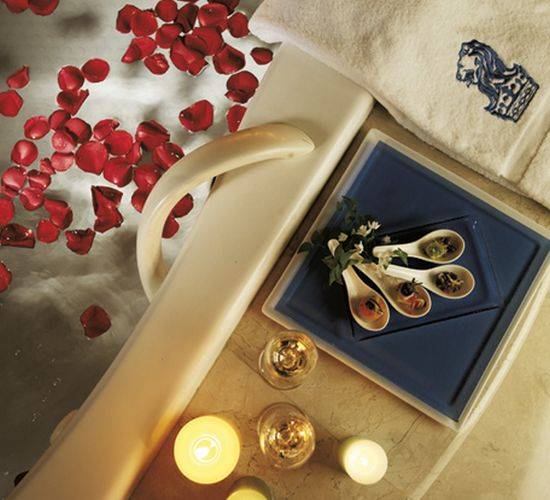
Image: BornRich
Known for their interest in luxury brands and investments, ultra-rich Chinese consumers are also spending in what the Chinese media is called “meditel”, a combination of medical services and a hotel offering treatment, accommodation and rest.
According to reports, approximately 180 high-income Chinese individuals will head to South Korea on a charter flight destined for the Ritz-Carlton Hotel in Seoul for a $88,000 Korean Anti-Aging treatment.
A Chinese travel agency has arranged specific tour packages, which include shopping, sightseeing and plastic surgery. This particular anti-aging tour will take place at the end of April and has been marketed to high-income consumers who are looking to travel for a week during the May Day holiday. The tour is almost sold out and Possom Prestige, the anti-aging clinic and spa at the Ritz-Carlton Hotel Seoul will offer numerous anti-aging programs priced from $440 al the way to $87,680.
Three travelers have already booked the “full package program” and they will receive an 8-night stay at the Ritz-Carlton along with a stem cell treatment ranging from $8,768 to $43,800 that includes a six-month supply of nutritional supplements. Thirty other travelers chose a different program that covers a physical check-up, plastic surgery, hair transplant and skin care for more than $43,800.
In addition to those specific packages available, Possom Prestige is also offering a complete wellness package that includes medical examination services, filler procedures and high-end spa treatments. These “meditels”, or medical clinics located inside luxury hotels, appear to be growing fast within the medial tourism industry in South Korea. They provide consumers with the services without the typically complicated administrative process.
Christopher R. Clark, general manager of the Ritz-Carlton Seoul, said of the spa,”When we decided to renovate the area, we looked very carefully ― are we going to continue to have a retail arcade like many hotels do, or are we going to try to make ourselves different in some way? We decided to go for the spa and the anti-aging clinic because we do see this trend rising and definitely we were in the right place in the city to have this type of business.” He also noted that adding a hotel and a clinic can be good partners for the business where guests’ privacy is important.
Posted In: Hilton Worldwide Luxury Brands Appoints Stuart Foster as Vice President of Marketing
Today, Hilton Worldwide Luxury Brands announced Stuart Foster as Vice President of Marketing. Former Vice President of the Southeast Region for Moet-Hennessy USA, a division of LVMH, Foster will lead all luxury marketing initiatives and oversee the strategic development of global positioning for Waldorf Astoria Hotels & Resorts and Conrad Hotels & Resorts. Foster will report directly to John Vanderslice, Global Head of Luxury & Lifestyle Brands, of Hilton Worldwide and work from the Hilton Worldwide Headquarters in McLean, Va.
Posted In: Marbella's old town has charm in spades

Between the beaches and the jagged peaks of the Sierra Blanca mountains sits Marbella’s old town – its Moorish casco antiguo – an unexpected pocket of peaceful, cobble-stoned charm and antiquity among the southern Spanish resort town’s modern mix of working local life and tourist trappings.
Most buyers in this part of the Costa del Sol scuttle to the holiday complexes near the beach or villas in the hills – homes with pools, lawns and parking spaces. But Marbella’s historic centre, an enclave of whitewashed houses, shady squares and family-owned restaurants, offers something that a new development never can.
This is where you come for character and the buzz of Spanish life on the doorstep, from the pavement cafés and tapas bars – squeezed into alleys narrow enough to lean out of your window and shake hands with your neighbour opposite – to the local fiestas that take over the streets.
The appeal was instant for Diane Langford, 64, and her partner Johny Taylor, 69, from Bingham, near Nottingham. Not only have they found a characterful holiday home in their 150-year-old house on Calle Lobatas, they have also found a way to bring in year-round rental income that many second home owners in the area can only dream of.
“When we started house-hunting in Marbella in 2005, agents kept fobbing us off with off-plan properties. We wanted an older property that we could refurbish ourselves in the historic quarter, which has a wonderful atmosphere,” says Diane, who runs a gift shop in Bingham.
Posted In: Energy-rich Qatar seeks la dolce vita with purchase of luxury resorts on Italy’s Sardinia isle
Qatar signed a deal Monday to buy the operator of four luxury resorts and other properties on the island of Sardinia as the wealthy Gulf emirate looks to bolster ties with Italy. The purchase coincided with a visit to Rome by the country’s emir. It is the latest deal in a European shopping spree that has given the natural-gas rich state a stake in European banks, energy companies and some of the continent’s best known brands. 0 Comments Weigh InCorrections? Personal Post State-owned Qatar Holding, an arm of the country’s sovereign wealth fund, said it will acquire resort operator Smeralda Holding from Los Angeles-based real estate investment firm Colony Capital. The deal includes the Cala di Volpe, Pitrizza, Romazzino and Cervo hotels, a marina and shipyard, a golf club and a 51 percent interest in 2,290 hectares (5,660 acres) of undeveloped land nearby. Qatar Holding plans to keep Smeralda’s existing management, and said Starwood Hotels and Resorts Worldwide Inc. will continue to run the hotels. Financial terms were not disclosed. The deal must still be approved by Italian regulators. The deal was announced as Italian Premier Mario Monti held talks with Qatar’s emir Sheik Hamad bin Khalifa Al Thani at a government villa in Rome. Monti hailed the visit as way for the countries to strengthen their friendship. “I am very happy for this meeting because it was (an) occasion to consolidate a strategic relationship between the two countries,” Monti told a news conference after the talks. The emir told reporters that Qatar’s sovereign fund is looking for ways to invest in Italy. When asked what factors discouraged investment in Italy, the emir said “corruption, first of all,” according to Monti. Among the accords signed Monday was one aimed at boosting efforts to fight graft and crime. Another raises the number of passenger flights between the countries from 14 to 35 weekly, and cargo flights from two to seven, Monti said. Monti promised Italian help to Qatar as it prepares to host soccer’s 2022 World Cup. “Italy has unique know-how and can contribute to the success” of the sporting event, the Italian leader said. Over the past several years, Qatar has used its vast energy wealth to amass a diverse portfolio of European properties. Its holdings on the continent include stakes in Barclays PLC, Credit Suisse Group, Volkswagen AG, and the London Stock Exchange. It acquired stakes in Spanish power utility Iberdrola SA and electric company Energias de Portugal last year. Qatari investors control French soccer team Paris Saint-Germain and Spanish club Malaga, while the logo of state-sponsored nonprofit Qatar Foundation graces the jerseys of another Spanish team, Barcelona.
Posted In: Surf Air: Can an all-you-can-fly airline possibly work?
SURF AIR, a Californian start-up, has a novel business model: for a monthly fee you can fly with the airline as much as you want. Is buffet-style air travel the wave of the future? JetBlue and Sun Country Airlines have both already tried offering all-you-can-fly passes, but so far no carrier has built its business model exclusively on a buffet plan. The idea isn't bad, but some scepticism is warranted. At $790 a month, Surf Air's flying plan will probably only appeal to business travellers who often go to the same places and rich Californians in long-distance relationships. Will that customer base allow Surf Air to make a profit? Maybe: 20m frequent flyers jetted between San Francisco and Los Angeles in 2011, according to the company's numbers. The airline plans to launch with service between Palo Alto, Monterey, Santa Barbara and Los Angeles, but it still needs to secure regulatory approval, according to a company press release. Frequent flyers make up a huge portion of the business-traveller population, and almost every airline relies on business travellers to get (and stay) in the black. There is surely some group of private-jet-sharing business travellers who might be attracted to an all-you-can-jet airline as a cheaper alternative. A lot will depend on how many flights and how much convenience Surf Air can offer, and how quickly it can expand service. The company's promises certainly seem attractive: [Surf Air will offer] its members 30-second booking and cancellations, travel to and from uncongested regional airports, and an easy arrive-and-fly process with no hassle, no lines and no extra fees. It's easy to make promises, though. It's much harder to run a profitable airline. As Gulliver often notes, the American airline sector overall has never really made any money—in fact, total earnings over the entire history of the industry are minus $33 billion. That, of course, suggests that existing airlines might be doing it wrong. Maybe all-you-can-fly really is the way to go. It's at least worth a shot. I'll be eager to see what people think of the final product—assuming regulators give the go-ahead.
Posted In: Worrying is good for you and reflects higher IQ
It evolved in humans along with intelligence to make them more adept at avoiding danger. A study of 42 people found the worst sufferers of a common anxiety disorder had a higher IQ than those whose symptoms were less severe. Scientists say their findings published in Frontiers in Evolutionary Neuroscience, suggest worrying has developed as a beneficial trait. Psychiatrist Professor Jeremy Coplan, of SUNY Downstate Medical Centre in New York, and colleagues found high intelligence and worry are linked with brain activity measured by the depletion of the nutrient choline in the white matter of the brain. He said: "While excessive worry is generally seen as a negative trait and high intelligence as a positive one, worry may cause our species to avoid dangerous situations, regardless of how remote a possibility they may be. "In essence, worry may make people 'take no chances,' and such people may have higher survival rates. Thus, like intelligence, worry may confer a benefit upon the species." The researchers made the discovery by monitoring activity in the brains of twenty six patients with generalized anxiety disorder (GAD) and eighteen healthy volunteers to assess the relationship between IQ, worry and the metabolism of choline. In the control group high IQ was associated with a lower degree of worry, but in those diagnosed with GAD it was linked with more. The correlation between IQ and worry was significant in both the GAD group and the healthy control group. But in the former it was positive and in the latter negative. Previous studies have indicated excessive worry tends to exist both in people with higher and lower intelligence, and less so in people of moderate intelligence. It has been suggested people with lower intelligence suffer more anxiety because they achieve less success in life. Worrying has also been shown to lessen the effect of depression by countering brain activity that heightens the condition.
Subscribe to:
Posts (Atom)

